
Pierre Through the Portrait
The ImaginaryThis flow follows Sartre’s example of trying to recover Pierre’s face and shows how memory, a photograph, and a caricature each make the absent person appear differently.
increasing Bearing strength in each event
 decreasing
Bearing strength in each eventdecreasingAn Incomplete Recollection
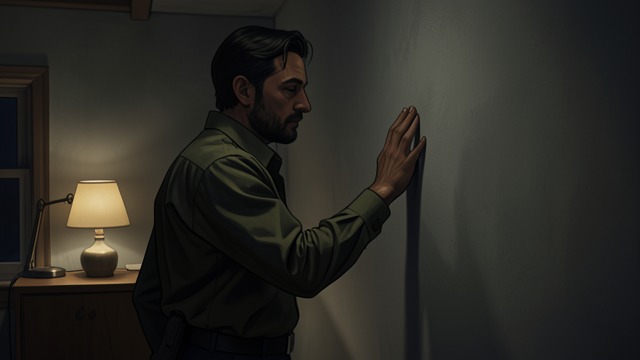
A Face Sought in Absence
The first attempt
Sartre begins with an effort to remember Pierre’s face. The mental image is blurred, incomplete, and unable to restore the expression that gives the friend his distinctive presence.
The failure is not simply a lack of detail. It exposes the difference between possessing information about a face and feeling that the person has returned.
A problem of representation
This initial effort sets up a comparison between several means of presenting the same absent person. Each will offer a different relation between visible matter and personal meaning.
The Photograph’s Limitation

Precision Without Life
A richer surface
A photograph of Pierre supplies features that memory omitted. It gives the face greater apparent precision, yet Sartre finds that it fails to capture the expression he seeks.
The photograph can be inspected as a physical object, but that inspection does not itself bring Pierre imaginatively before the viewer.
Intention animates the image
For the photograph to function as Pierre’s portrait, consciousness must direct itself through it toward the absent person. Its visible marks matter because an intentional act treats them as representative.
The Caricature Restores Expression
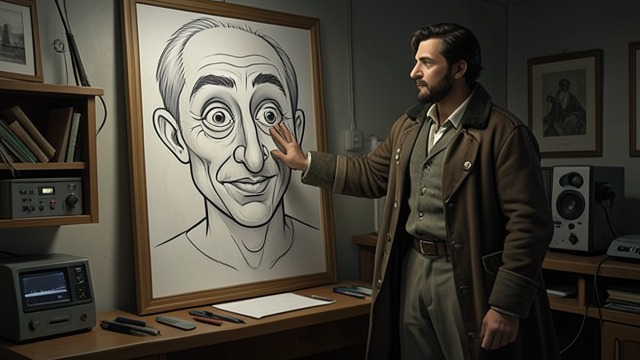
Recognition Through Exaggeration
Distortion with purpose
A caricature exaggerates Pierre’s features, yet Sartre finds that it restores the vitality missing from the photograph. Its distortions can express an aspect of the person more powerfully than faithful detail.
The drawing does not work by mechanically copying a face. Its lines become matter through which the viewer intends Pierre.
A unified act
Memory, photograph, and caricature serve one project but do not provide interchangeable contents. Their differing materials reveal imagination as an activity that interprets and animates what is given.
Opening of Part I, Chapter 2, Section I
Immediately after the recollection fails
At the end of the portrait example
